
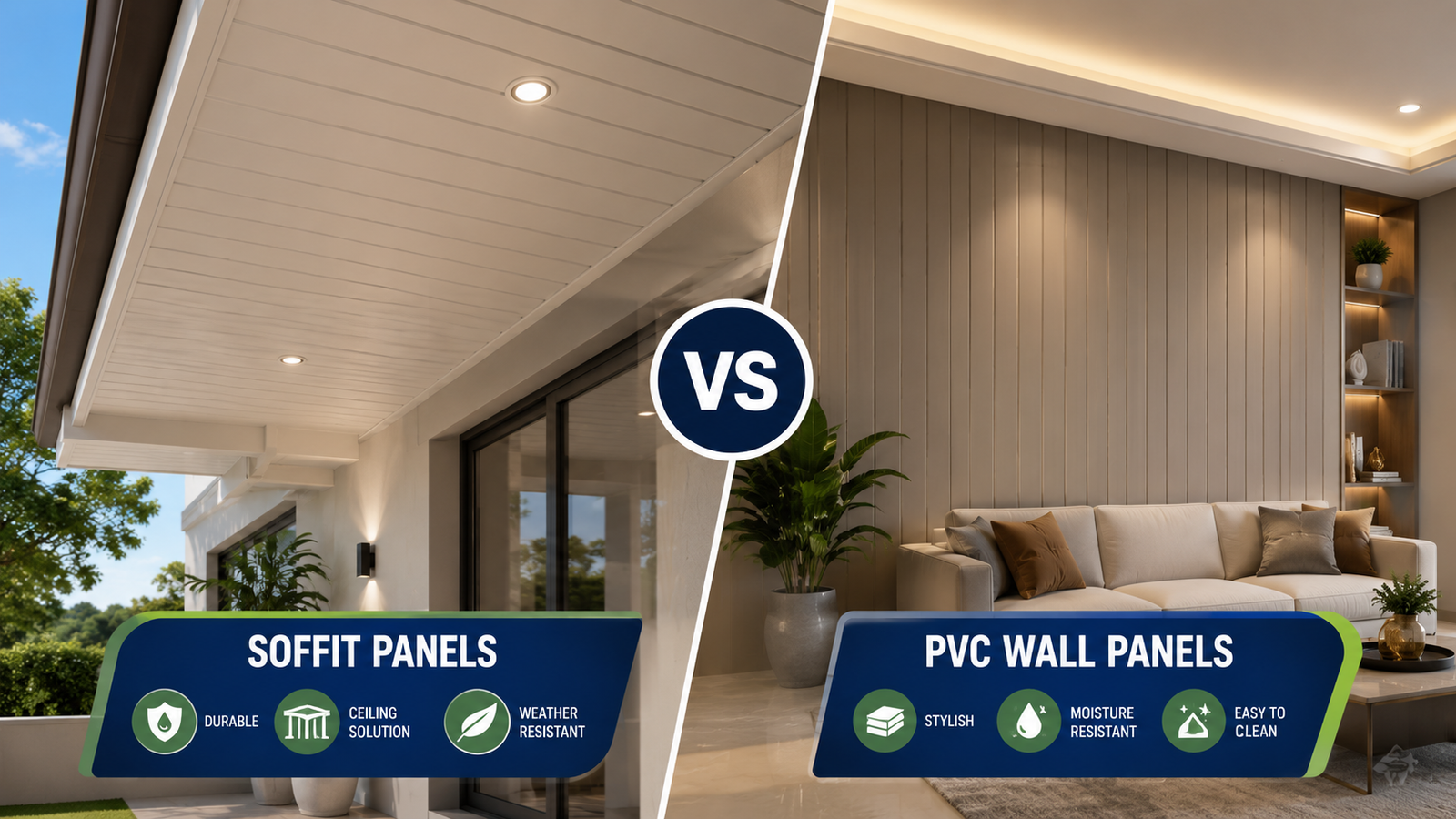
Choosing between soffit panels and PVC wall panels depends on the installation area, desired appearance, and project requirements. While both can provide a modern and practical finish, they are generally designed for different applications. Understanding these differences can help you choose the right panel for your walls, ceilings, or architectural surfaces.
Soffit Panels vs PVC Wall Panels: Understanding the Difference
The key difference is their intended application. Soffit panels are commonly used for ceilings, soffits, and overhead architectural surfaces, adding depth and visual interest through different profiles, patterns, textures, and finishes. PVC wall panels are primarily designed for vertical surfaces, helping transform plain walls into decorative feature areas.
In simple terms, soffit panels are typically chosen for ceilings and overhead spaces, while PVC wall panels are mainly used to enhance walls. However, applications can vary by product, so always check the manufacturer’s recommendations before selecting a panel.
How Are Soffit Panels Used?
Modern ceiling design has become an important part of residential and commercial architecture. A ceiling is no longer considered just a functional surface. With the right design, it can become one of the most noticeable features of an interior.
Soffit panels can be used to introduce structure and visual interest to overhead spaces. Depending on the selected profile, they can create clean linear patterns, natural wood-inspired appearances, contemporary designs, or distinctive architectural features.
Common applications can include:
- Residential ceilings
- Living rooms
- Bedrooms
- Offices
- Hotels
- Restaurants
- Retail spaces
- Showrooms
- Reception areas
- Commercial interiors
- Covered balconies
- Canopies
- Suitable exterior architectural areas
The design of the panel can influence how light interacts with the ceiling. Profiles with grooves, lines, or depth can create natural shadows and add dimension to the space.
For projects where the ceiling is intended to become a design feature rather than remain a plain surface, choosing the right soffit panel profile can make a significant difference.
Where Are PVC Wall Panels Commonly Used?
Walls are one of the largest visible surfaces in any interior space. A plain wall can sometimes make an area feel simple or unfinished, while a well-designed feature wall can become a strong focal point.
PVC wall panels are commonly used to enhance vertical surfaces with decorative patterns, textures, colours, and finishes. They can be considered for both residential and commercial interiors depending on the product and project requirements.
Typical applications include:
- Living room feature walls
- Bedroom walls
- Office interiors
- Reception areas
- Retail stores
- Hotels
- Restaurants
- Commercial buildings
- Hospitality spaces
- Decorative interior walls
The choice of wall panel often depends on the overall interior theme. A subtle finish may suit a minimalist design, while a textured or patterned panel can create a stronger statement.
For commercial spaces, wall panels can also help create a consistent visual identity across reception areas, showrooms, offices, and customer-facing environments.
Is PVC the Same as a Soffit Panel?
This is where much of the confusion comes from.
PVC describes a material, while soffit panel describes a product type or intended application.
This means that simply knowing a product is made from PVC does not tell you exactly where it should be used or what type of design it provides.
Different PVC-based products can be developed for different purposes. A panel designed for a wall may have a completely different profile and appearance from one designed for a ceiling or soffit application.
When comparing products, it is therefore important to look beyond the material and consider:
- Intended application
- Product profile
- Panel dimensions
- Available finishes
- Colour options
- Design requirements
- Environmental conditions
- Manufacturer recommendations
The material is only one part of the product. The overall construction and intended application are equally important when choosing the right solution.
Can Soffit Panels Be Used on Walls?
The answer depends on the specific panel.
Some soffit panel designs may be suitable for wall applications, particularly when the goal is to create a continuous design across different surfaces. For example, a designer may want to carry a similar visual style from a ceiling onto a feature wall.
Using complementary panel profiles across walls and ceilings can create a more coordinated architectural appearance.
However, it should not be assumed that every soffit panel is automatically suitable for wall installation. Product specifications and manufacturer recommendations should always be checked before making a decision.
If a panel is being considered for a different application from its primary intended use, it is important to confirm its suitability with the manufacturer.
Can PVC Wall Panels Be Used on Ceilings?
The same principle applies to PVC wall panels.
Some products may be suitable for ceiling applications, while others are intended specifically for vertical walls. A ceiling application can have different product requirements from a wall application, so suitability should be confirmed before selection.
If your main requirement is a decorative ceiling, it is generally sensible to explore products specifically designed or recommended for ceiling and soffit applications.
For projects involving both walls and ceilings, the best approach is to select products that are suitable for each surface while maintaining a consistent overall design.
Soffit Panels vs PVC Wall Panels: Which Is Better?
There is no single product that is better for every project. The right option depends on the surface and the result you want to achieve.
Soffit Panels May Be the Better Choice For:
- Feature ceilings
- Decorative ceiling designs
- Soffit applications
- Architectural overhead surfaces
- Covered balconies, where suitable
- Canopies and covered areas
- Residential ceiling projects
- Commercial feature ceilings
If you want to make the ceiling an important architectural element, a soffit panel can help introduce visual depth, pattern, and character.
PVC Wall Panels May Be the Better Choice For:
- Feature walls
- Decorative wall surfaces
- Living room interiors
- Bedroom walls
- Office spaces
- Reception areas
- Retail interiors
- Hospitality projects
- Commercial wall applications
If the main focus is enhancing a vertical surface, a suitable PVC wall panel may provide the decorative appearance you are looking for.
Design Options and Finishes
The design of a panel is just as important as its application.
For ceilings, the profile can influence the overall character of the room. Linear profiles can create a clean and contemporary appearance, while wood-inspired designs can introduce warmth and a more natural feel.
For walls, the focus may be on texture, colour, pattern, and visual contrast.
When selecting a finish, consider how it will work with:
- Flooring
- Furniture
- Lighting
- Wall colours
- Natural daylight
- Doors and windows
- Other architectural elements
A well-coordinated combination of colours and finishes can help create a more unified interior.
Jamex offers different soffit panel profiles and finishes, allowing architects, designers, contractors, and project owners to explore options based on their design requirements.
Jamex Soffit Panel Collection
Jamex offers a range of soffit panel profiles designed to provide different visual styles for modern architectural and interior spaces.
The collection includes:
- J-20 Echo Baffle
- J-21 Soffit
- J-22 Nova Verto
- J-23 Bamboo
- J-24 Nova Grove
- J-25 Nova Wave
- J-26 Paralon
Each profile offers its own design character, allowing you to select an option that complements your project’s architectural style.
Whether you are working on a residential interior, commercial property, office, hotel, retail space, or architectural project, the right profile and finish can help create a distinctive result.
Jamex manufactures and supplies panel solutions in India and supplies products across India for different project requirements.
How to Choose the Right Panel
Before selecting between soffit panels and PVC wall panels, consider the following factors.
Start with the surface. Determine whether you are finishing a ceiling, soffit, wall, balcony, canopy, or another architectural area.
Consider the design objective. Decide whether you want a statement ceiling, a decorative feature wall, or a coordinated design across multiple surfaces.
Compare profiles. Different profiles create different visual effects. Review the available options before choosing.
Check colours and finishes. The selected finish should complement the lighting, furniture, flooring, and surrounding architecture.
Confirm product suitability. Always check the product specifications and manufacturer’s recommendations for the intended application.
Think about the complete project. If your project includes both walls and ceilings, consider how the selected products will work together visually.
Final Thoughts
Soffit panels and PVC wall panels serve different design purposes. Soffit panels are ideal for ceilings and overhead applications, adding depth, structure, and architectural detail, while PVC wall panels are mainly used to enhance vertical surfaces and create decorative feature walls.
The right choice depends on your project’s surface, design goals, and the panel’s profile, finish, and application. Explore the Jamex soffit panel collection to discover a range of profiles, colours, and finishes for modern architectural spaces.