
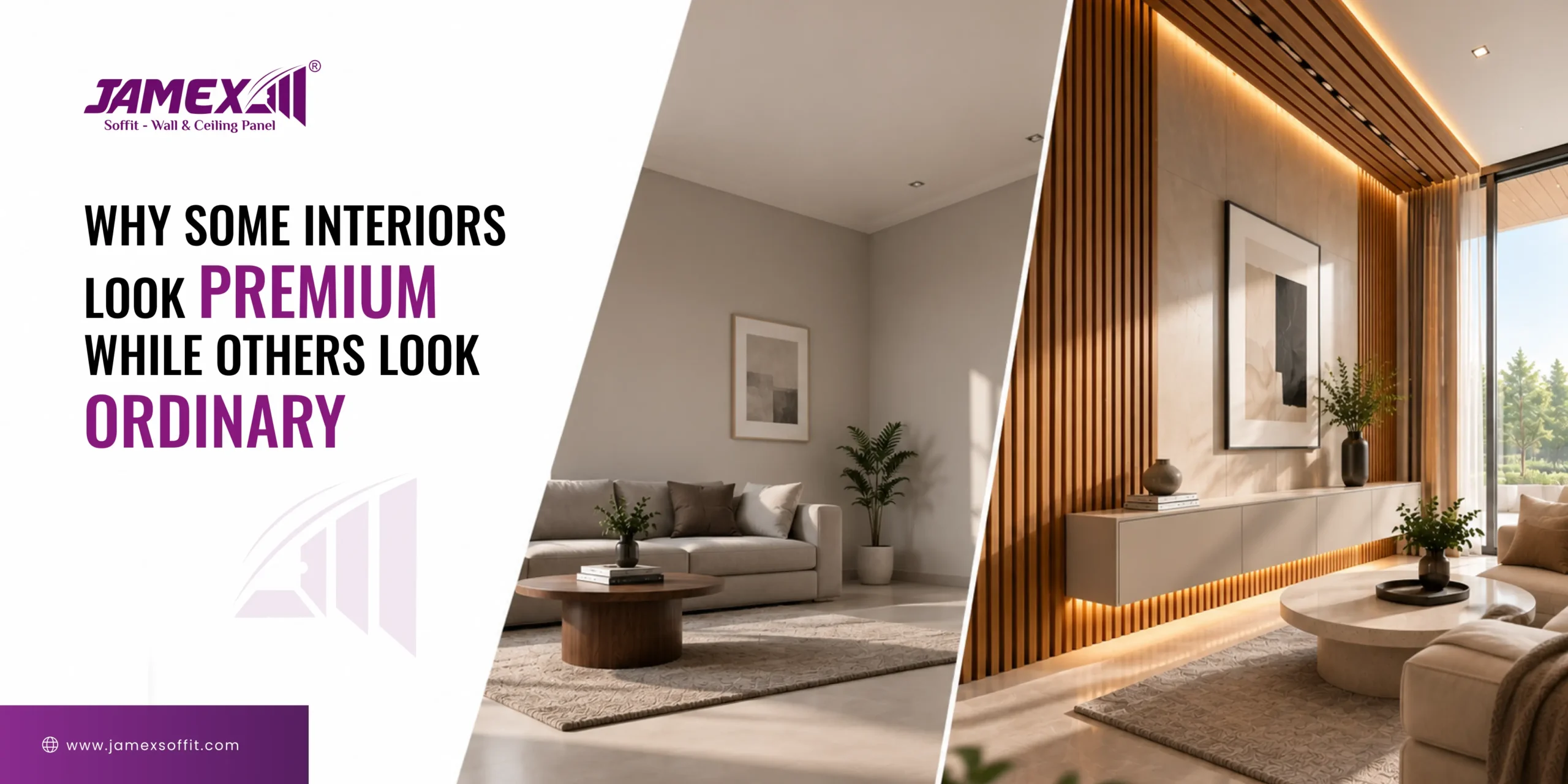
Walk into a well-designed home and there is often an immediate feeling you cannot quite explain. Nothing may be particularly loud or extravagant, yet the room feels balanced, warm and expensive.
Then you walk into another space with beautiful furniture, polished finishes and plenty of decoration, but something feels slightly off. The difference is rarely about the price of individual products. It is about how those products work together.
A premium interior feels intentional. The proportions make sense. Materials complement one another. Lighting reveals the right details at the right time. Even the ceiling, which is often treated as an afterthought, has a role to play.
What Makes an Interior Feel Premium?
A room does not need a dozen design elements to look sophisticated. Sometimes, a carefully finished wall, a beautifully detailed ceiling and the right lighting are enough to transform the entire atmosphere.
Texture is particularly important. A completely flat surface can make a room feel ordinary, while too much texture can make it feel restless. The ideal design introduces enough depth to create interest while allowing the rest of the room to breathe.
A linear surface may look subtle during the day, but once warm light passes across its grooves, shadows begin to appear. A curved ceiling can feel almost invisible in daylight and become the defining feature of the room at night.
Walls and Ceilings Work Together
Walls naturally attract attention because they occupy so much of our visual field. A feature wall can establish the mood of a living room, bedroom, office or hospitality space almost instantly.
This is where PVC wall panels can offer more than a decorative surface. With different profiles and finishes, they can introduce rhythm, texture and warmth without making the space feel over-designed.
A living room, for example, may benefit from a restrained linear wall behind the television or sofa. A bedroom can use a warmer wood-inspired finish to create a softer atmosphere. In commercial or hospitality interiors, a more distinctive profile can become a visual signature.
The ceiling deserves the same consideration. Instead of treating it simply as a surface for lights and concealed services, a PVC false ceiling can become part of the overall design language.
The Difference a Soffit Ceiling Can Make
Soffit panels become particularly interesting. Linear soffit profiles can visually extend a space and create a sense of direction. Grooved designs introduce subtle shadows, while wave profiles soften rooms that are otherwise dominated by straight architectural lines.
With the right finish and lighting, soffit panels can turn an ordinary ceiling into a considered design element without taking away from the furniture, flooring or other details.
This approach works especially well in spaces where the ceiling is visible from multiple angles from a living room looking upward, a villa entrance viewed from outside, or a hospitality space where the ceiling contributes to the overall guest experience.
Jamex Soffit Panels: Designed Around Different Spaces
Every space has its own personality, which is why one ceiling profile cannot work equally well everywhere. Jamex brings together seven soffit profiles, each offering a different visual direction.
Together, these soffit panels give designers the freedom to choose a profile according to the mood, scale and function of the space rather than forcing every project into the same visual style.
Designing the Details
The difference between a good ceiling and a great one often comes down to three things: proportion, finish and lighting. Start with the size of the room. A strong linear profile can make a compact space feel more directional, while a softer profile can help balance larger areas.
Then consider the finish. Wood-inspired tones can bring warmth into neutral interiors, while darker finishes can create a richer evening atmosphere. The goal is not simply to select the most attractive finish on its own, but one that works with the flooring, walls, furniture and lighting.
Concealed lighting can emphasise grooves. Linear illumination can follow the direction of the panels. Soft ambient light can bring out the warmth of a wood-inspired finish. When lighting and ceiling design are planned together, the result feels far more integrated.
The same principle applies to PVC wall panels. Instead of treating the wall as a separate decorative element, consider how it interacts with the ceiling, furniture and light. A coordinated wall and ceiling can make even a simple interior feel much more sophisticated.
When the Ceiling Completes the Room
With the right soffit panels, the right PVC wall panels, and a thoughtfully integrated PVC false ceiling, the ceiling stops being an overlooked surface and becomes part of the experience of the room. And perhaps that is the real difference between an interior that simply looks good and one that stays with you.
Good design fills a space. Great design gives it a feeling.