
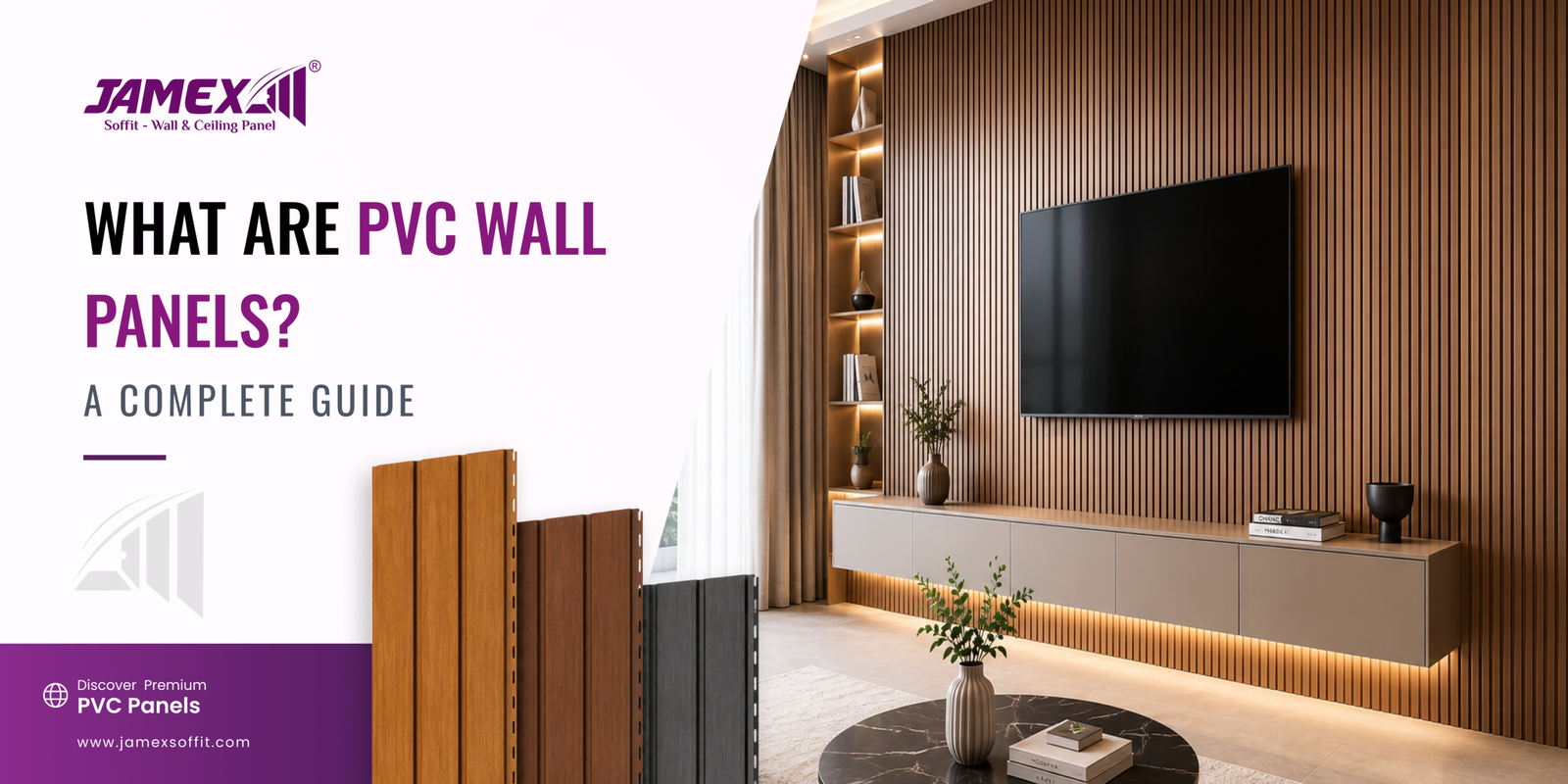
Walk into any hardware store or browse interior design catalogs today, and you’ll come across dozens of wall panel options MDF, WPC, laminate, vinyl, and PVC, to name a few. They often look similar in photos, but the materials behind them behave very differently once installed in a real home or commercial space.
This guide focuses specifically on answering what PVC wall panels actually are the material itself, how it’s manufactured, how it compares to other panel materials on the market, and what factors like thickness, fire rating, and lifespan actually mean for your project. If you’re trying to understand the material science before choosing a panel system, this is the resource for you.
What Is PVC, Exactly?
PVC stands for polyvinyl chloride, one of the most widely produced synthetic plastics in the world. It’s created through a polymerization process that turns vinyl chloride monomers into a rigid or semi-rigid plastic, depending on the additives used during manufacturing.
For construction and interior applications, PVC is manufactured as rigid PVC (uPVC) the “u” stands for unplasticized, meaning no additional softening agents are used. This rigid form is what gives PVC wall panels their structural strength, dimensional stability, and resistance to bending or sagging over time, unlike softer plasticized PVC used in items like flexible pipe seals or vinyl flooring.
How PVC Wall Panels Are Manufactured
PVC wall panels are typically produced through an extrusion process, where PVC compound is heated and forced through a die to create a continuous profile with a hollow, honeycomb, or foam-core internal structure. This internal structure is what makes the panels lightweight without sacrificing rigidity. The surface is then finished through lamination, UV printing, or embossing to create the wood grain, stone, marble, or solid color effects seen in finished panels.
PVC Wall Panels vs. Other Wall Panel Materials
Understanding PVC in isolation only tells half the story. Here’s how it stacks up against the other materials commonly used for interior wall and ceiling panels.
PVC vs. Vinyl Wall Panels
The terms “PVC” and “vinyl” are often used interchangeably, and technically, vinyl is a form of PVC. However, in the panel industry, “vinyl panels” usually refers to thinner, more flexible sheet products (like vinyl wallpaper or vinyl siding), while “PVC panels” typically refers to rigid, extruded board-form panels designed for structural wall and ceiling cladding. Rigid PVC panels hold their shape better over large spans and don’t require as much substrate support as thin vinyl sheeting.
PVC vs. WPC (Wood Plastic Composite)
WPC panels combine wood fiber with plastic polymers, giving them a denser, heavier feel that mimics real wood more closely. However, this added wood content makes WPC marginally more susceptible to moisture absorption over long periods compared to pure PVC, which contains no organic material at all. PVC panels are generally the better choice for consistently damp environments like bathrooms or coastal properties, while WPC is often chosen where a heavier, more timber-like feel is prioritized.
PVC vs. Laminate Panels
Laminate panels are usually built on an MDF or particleboard core with a decorative laminate layer bonded to the surface. While laminate offers a wide range of finishes, the core material is wood-based and can swell or delaminate if exposed to consistent moisture. PVC panels, being solid plastic throughout, don’t have this vulnerability, making them a more dependable option for wet or humid areas.
PVC vs. MDF Panels
MDF (medium-density fiberboard) is a wood-based panel material, valued for its smooth surface and ease of machining. However, MDF is highly moisture-sensitive and will swell or disintegrate if it comes into prolonged contact with water. PVC’s non-porous nature makes it a far more resilient alternative for interiors where humidity or occasional water exposure is a factor.
Understanding PVC Panel Thickness and Profiles
PVC wall panels are typically available in a range of thicknesses, and this affects both performance and application:
- Thinner profiles are lighter and easier to handle, suited to standard residential walls and ceilings.
- Thicker, denser profiles offer greater rigidity and are often chosen for larger spans, commercial applications, or areas with higher structural demands.
The internal core structure — whether foamed, hollow, or honeycomb — also affects the panel’s weight-to-strength ratio. A denser core generally provides better sound dampening and a more solid feel when tapped, which matters in spaces where acoustic comfort is a priority.
Fire Safety and PVC Panels
One question that comes up often when specifying PVC for commercial or residential projects is fire behavior. Rigid PVC is inherently self-extinguishing due to its chlorine content, meaning it doesn’t sustain a flame on its own once the external heat source is removed. That said, fire ratings vary by manufacturer and specific product formulation, so it’s worth checking the fire classification of any panel system against local building codes, especially for commercial or hospitality projects.
Environmental Considerations
PVC has drawn scrutiny over the years for its environmental footprint, largely tied to its production process and end-of-life disposal. However, the picture has shifted with modern manufacturing:
- Rigid PVC panels are long-lasting, which reduces the frequency of replacement and material waste compared to shorter-lived finishes like paint or certain laminates.
- Many manufacturers now offer recyclable PVC panel lines, allowing offcuts and end-of-life panels to be processed rather than landfilled.
- PVC’s durability means fewer resources spent on repairs, repainting, or replacement over a building’s lifespan.
If sustainability is a priority for your project, it’s worth asking suppliers directly about recycled content and recyclability programs, as these vary significantly between manufacturers.
How Long Do PVC Wall Panels Last?
With proper installation, PVC wall panels typically have a service life of 15 to 25 years, depending on the environment and quality of the panel system. Indoor applications with stable conditions tend to be on the higher end of that range, while panels used in more demanding environments direct sun exposure, extreme humidity, or heavy commercial traffic may see a shorter effective lifespan if the product isn’t rated for those conditions.
Conclusion and Next Steps
PVC wall panels stand apart from other panel materials primarily because they’re not made of wood fiber, no organic content, nothing for moisture to break down over time. That single material distinction is why PVC has become a go-to choice in bathrooms, kitchens, humid climates, and any space where long-term durability matters more than a marginal difference in texture or feel.
Now that you understand what PVC wall panels are made of and how they compare to alternatives like WPC, laminate, and MDF, the next step is choosing the right profile, finish, and thickness for your specific space.
Explore Jamex’s PVC wall and ceiling panel collections to see the full range of finishes, profiles, and technical specifications, or get in touch with our team for guidance on the right system for your project.